2019年10月16日 星期三

怎樣避免乘飛機後出現血栓?

上星期解釋過為何乘飛機後會腳腫,若機程長而雙腳缺乏郁動,靜脈內的血液便有機會因靜止不動而形成血栓,若血栓被沖至肺部,最嚴重可以致命。

但讀者們又不用太擔心,因為這情況是完全可以預防的。首先是要認識有此風險的存在,因絕大部份患者是對這情況一無所知,那便無從預防。

最基本是要保持小腿肌肉的運動,如把腳掌上下郁動,不時離開座位走動一下,已足以保持小腿靜脈血液的流動。應多點喝水,以保持血液內的水分;但應避免喝酒或咖啡,因這些利尿的飲品會令體內水分流失,血液濃度提升,容易型成血栓。

有些朋友喜歡乘長途機時服食安眠藥,好讓他們即使坐着也可以睡得多點,但其實這是不適當的,因為這會無可避免地令小腿缺乏郁動。

此外,穿着壓力襪是簡單而有效的預防措施,  選購時應確保是漸進式壓力的設計,即最緊的地方是於足踝部位,壓力逐漸向上遞減,以增加深層靜脈血液的流量,一般人穿着10-15mmHg壓力已足夠,但靜脈曲張患者,肥胖,孕婦等,則可穿着比較緊的。

一些再高危的人士,如癌症患者,行動不便,大手術後等,可由醫生處方一些薄血的藥物,避免血栓形成。明白這些,環遊世界也不用擔心了。


外科專科醫生謝卓華


資料來源: AM730
以上所提供的資訊僅作為教育及參考用途,如果你有任何醫療問題,
應向醫生查詢,而不應單倚賴以上提供的資料。

2019年10月10日 星期四

Why DVT can strike anyone, any time and how to avoid a killer blood clot (2)

The first documented case of DVT was reported during the middle ages. In 1271, a 20-year-old Norman cobbler complained of pain in his lower leg. A visit to the tomb of canonised King Louis IX was advocated, where the cobbler massaged dust into his leg.

Subsequent DVTs were diagnosed in pregnant and postnatal women, believed to be the consequence of “evil humours” during pregnancy and post-delivery – meaning a build-up of unconsumed breast milk.

During the first world war, exhausted young soldiers in the trenches suffered from blood clots in their legs, caused by sleeping upright in chairs, their legs beneath them. Today’s taxi and bus drivers are at risk as they sit immobile for long stretches.


Tse says the incidence of DVT among Hongkongers is on the rise. “Overall annual incidences of thromboembolic disease in Hong Kong is 30 per 100,000 of the population; hospital mortality rates associated with DVT are 7.3 per cent.”

The US Centres for Disease Control and Prevention suggests the incidence is higher in America – one to two per 1,000.

One-third of people with DVT or a pulmonary embolism will have a recurrence within 10 years; 10 per cent to 30 per cent of people will die within one month of diagnosis. In the US, one person is diagnosed with DVT every minute, and a sufferer dies as a result of its complication, pulmonary embolism, every six.

Among those with DVT, half will have long-term complications (post-thrombotic syndrome) – as I do: a nagging pain presents in my right calf after prolonged standing or exercise due to enduring damage to valves in the vein.


Flying isn’t the only cause of DVT, and not all people who fly long-haul will develop it. Given the frequency of air travel today, though, it’s a risk we all need to take more seriously. I certainly do: I drink lots of water – “two litres during a seven-hour flight because the atmosphere in the cabin means you dehydrate 20 per cent faster”, my surgeon said.

This means I can’t help but walk up and down the aisle to get my blood circulating, as I get up to use the loo every hour, and instead of skinny jeans I wear toe-to-groin surgical stockings.

Air travel isn’t as sexy as it used to be.

Travel tips to prevent DVT

All air travellers, says Tse, should consider the following:
  • Stand up and walk around every hour or two;
  • Consider wearing knee-high (or higher) compression stockings;
  • Apart from the stockings, wear loose-fitting, comfortable clothing;
  • Avoid medications such as sedative or sleeping pills, and alcohol, which could impair your ability to get up and move around;
  • Flex and extend the ankles and knees periodically, avoid crossing the legs or sitting on your legs, and change positions frequently while seated

The US Centres for Disease Control suggests three simple exercises to help keep the blood flowing:

1. Raise and lower your heels while keeping your toes on the floor
2. Raise and lower your toes while keeping your heels on the floor
3. Tighten and release your leg muscles


Reference information:  SCMP
It is not intended as medical advice to any specific person. If you have any need for personal advice or have any questions regarding your health, please consult your physicians for diagnosis and treatment. 

2019年10月9日 星期三

Why DVT can strike anyone, any time and how to avoid a killer blood clot (1)

Who has not heard of DVT – deep vein thrombosis? I thought it happened only in overweight, unfit people over the age of 50, people who smoked too much, exercised too little and got their comeuppance as they ate their way through airline meals on seriously long-haul flights.

So when I – under 50 at the time, fit, non-smoker, lean – awoke after being cat-curled in a seat on a six-hour flight with a pain in my right calf, I naturally assumed it was only a cramp. I stretched my skinny-jean clad legs out, said “ouch”, gave it a rub and disembarked, certain I’d walk the soreness off in no time.

Except that I didn’t. Two days later, the deep ache was waking me at night and I resorted to pain medication. A nagging voice in my head began to question whether this was more than a mere cramp. A cautious friend advised a visit to a doctor’s clinic; the doctor examined my legs: no redness, no heat, no swelling – just pain.

“I’m sure it’s not DVT,” he said, “but we can’t take a chance.”
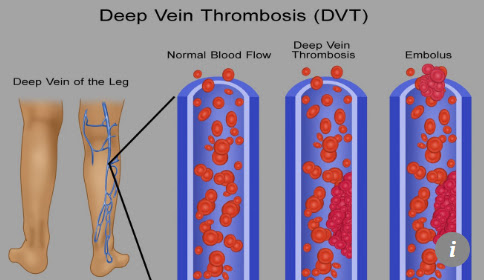

He sent me off to the accident and emergency department, where I had a blood test for D-dimer – a protein fragment from the breakdown of a blood clot. The test indicated I had DVT, confirmed by an ultrasound.

An injection of blood thinners to further break down the clot was plunged into my abdomen so that a bruise bloomed black and as big as my fist. X-rays of my chest followed, to ensure my lungs were clear and three months of anticoagulants were prescribed.

I was appalled. DVT didn’t happen to people like me: the young (ish), the fit, the lean non-smokers. Oh yes, they do, said the vascular surgeon who examined me.

Deep vein thrombosis is the medical term for blood clots in the deep veins of the leg. If a blood clot forms inside a blood vessel, explains Dr Chad Tse Cheuk-wa, a surgeon who specialises in vascular and endovascular surgery at Hong Kong’s Veno Clinic, “it can clog the vessel and keep blood from getting where it needs to go. When that happens, blood can back up and cause swelling and pain.”

DVT is always considered serious, as any clot in a vein “can travel to other parts of the body and clog blood vessels there”, Tse said. “Blood clots that form in the legs, for example, can end up blocking blood vessels in the lungs. This can make it hard to breathe and sometimes, when they are large, can lead to death.” A blood clot that travels to the lungs is a pulmonary embolism.

Many things can predispose a person to DVT, including obesity, smoking and age, as well as certain medical conditions, some medications – including birth control pills and hormone replacement therapy (HRT) – and surgery. Dr Tse says prolonged travel – whether by plane, train or automobile – appears to confer a two- to fourfold increase in risk, and taking one long-haul flight a year increases the risk by 12 per cent.

My surgeon said immobility and dehydration are the key reasons flying is a risk – and he warned that “long-haul” can be as short as four hours. Immobility allows the blood in your legs to pool in your calves, and a lack of hydration allows that blood to become “sticky”. The combination of thick, slow-flowing blood is not good.

 ..........cont'


Reference information:  SCMP
It is not intended as medical advice to any specific person. If you have any need for personal advice or have any questions regarding your health, please consult your physicians for diagnosis and treatment. 

2019年9月26日 星期四

懷孕期靜脈曲張的煩惱 (2)

產後可選擇微創方式治療

外科手術是治療靜脈曲張的傳統方法,病人一般在全身或半身麻醉下接受手術。以大隱靜脈抽除手術為例,醫生會在大腿近腹部及膝蓋 旁邊的位置,切開數厘米長的傷口,然後將有問題的靜脈抽出。手術無可避免地會引致瘀腫及疼痛等不適,傷囗亦會影響外觀;部分病人亦因而諱疾忌醫,拖延病 情。

可幸現時微創治療靜脈曲張的效果已與傳統手術相若,傷口微細之餘,痛楚亦減低。其中「靜脈腔內消融術」與「超聲波導引脈內注射」都是較常用的技術,在醫治早或中期的靜脈曲張,效果尤為理想。

「靜脈腔內消融術」的原理是於大腿造一個比針孔略大的開口,然後把光纖導管從傷口進入靜脈血管內(靜脈腔內)施行射頻或激光能 量,以破壞有毛病的靜脈。而「超聲波導引脈內注射」是把藥物注射到有毛病的靜脈,令靜脈萎縮。兩種微創治療皆在超聲波儀器的監察下進行,過程十分精確。

另外,當女士再次懷孕時,靜脈曲張有可能惡化,而且情況可能比先前更加嚴重,因此產後的婦女,如發現腳上的青筋或蜘蛛網般的紫紅色絲狀血管仍未退減,便應請醫生作出詳細檢查,以便於下次懷孕前先作出適當的治療。


外科專科醫生
謝卓華


資料來源:  she.com
以上所提供的資訊僅作為教育及參考用途,如果你有任何醫療問題,
應向醫生查詢,而不應單倚賴以上提供的資料。

2019年9月19日 星期四

懷孕期靜脈曲張的煩惱 (1)


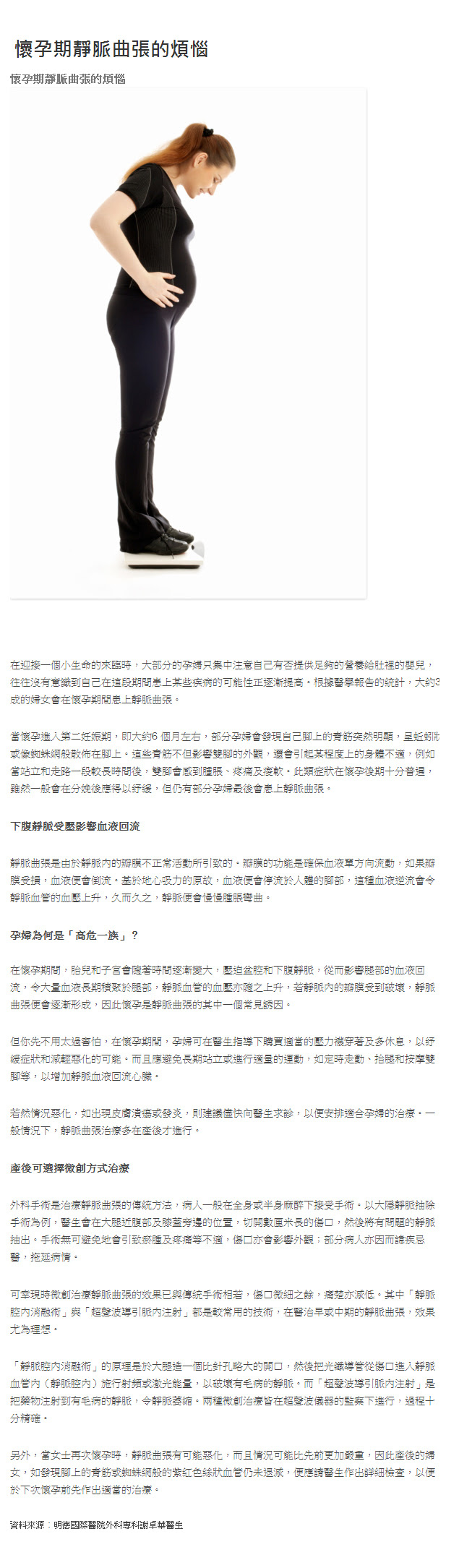
在迎接一個小生命的來臨時,大部分的孕婦只集中注意自己有否提供足夠的營養給肚裡的嬰兒,往往沒有意識到自己在這段期間患上某些疾病的可能性正逐漸提高。根據醫學報告的統計,大約3 成的婦女會在懷孕期間患上靜脈曲張。

當懷孕進入第二妊娠期,即大約6 個月左右,部分孕婦會發現自己腳上的青筋突然明顯,呈蚯蚓狀或像蜘蛛網般散佈在腳上。這些青筋不但影響雙腳的外觀,還會引起某程度上的身體不適,例如當站 立和走路一段較長時間後,雙腳會感到腫脹、疼痛及痠軟。此類症狀在懷孕後期十分普遍,雖然一般會在分娩後應得以紓緩,但仍有部分孕婦最後會患上靜脈曲張。

下腹靜脈受壓影響血液回流

靜脈曲張是由於靜脈內的瓣膜不正常活動所引致的。瓣膜的功能是確保血液單方向流動,如果瓣膜受損,血液便會倒流。基於地心吸力的原故,血液便會停流於人體的腳部,這種血液逆流會令靜脈血管的血壓上升,久而久之,靜脈便會慢慢腫脹彎曲。

孕婦為何是「高危一族」?

在懷孕期間,胎兒和子宮會隨著時間逐漸變大,壓迫盆腔和下腹靜脈,從而影響腿部的血液回流,令大量血液長期積聚於腿部,靜脈血管的血壓亦隨之上升,若靜脈內的瓣膜受到破壞,靜脈曲張便會逐漸形成,因此懷孕是靜脈曲張的其中一個常見誘因。

但你先不用太過害怕,在懷孕期間,孕婦可在醫生指導下購買適當的壓力襪穿著及多休息,以紓緩症狀和減輕惡化的可能。而且應避免長期站立或進行適量的運動,如定時走動、抬腿和按摩雙腳等,以增加靜脈血液回流心臟。

若然情況惡化,如出現皮膚潰瘍或發炎,則建議儘快向醫生求診,以便安排適合孕婦的治療。一般情況下,靜脈曲張治療多在產後才進行。


資料來源:  she.com
以上所提供的資訊僅作為教育及參考用途,如果你有任何醫療問題,
應向醫生查詢,而不應單倚賴以上提供的資料。

2019年9月11日 星期三

為何搭飛機後會腳腫?

每年聖誕及農曆新年假期,不少港人都喜歡乘飛機外遊。飛機上,很多人喜歡脫掉鞋子屈膝而坐,看書看戲睡覺,各適其適。大家有沒有留意,下機時要把鞋子穿上總是有點困難,腳部老是脹脹的。為什麼會這樣呢?

這關乎人體的血液循環及結構,下肢的靜脈血管在正常情況下是一條單程路,血液只能單向地向上流,朝心臟的方向走。而靜脈的結構相當奇妙,它有很多單向的活門,只容許靜脈內的血液向心臟方向流動,不能反方向倒流到腳部。而我們小腿的肌肉則是靜脈血液流動的動力泉源,當我們走路時,小腿肌肉反覆地放鬆及收縮,令肌肉內的靜脈受到按壓,形成泵一樣的效應,把血液沿着靜脈泵走。

因此,當我們坐得久,雙腿缺乏郁動,便會感到脹脹累累,很自然地便會起來走走,做點伸展活動,好像想把肌肉泵開動,令下肢靜脈的血液循環得以維持。

但在飛機上的問題是,若坐的是經濟客位,雙腿要全程垂下,由於座位狹窄,大家便傾向減少郁動,即使出來走走也不是那麼方便,於是整個機程除了上廁所,其餘時間雙腿也沒什麼郁動,小腿的肌肉泵便被關掉,下肢的靜脈血液便會隨着地心吸力向下積聚,令雙腳變腫。再者,機艙內的空氣壓力一般比地面低,亦令腳腫的情況更嚴重。

這情況一般在下機後,當下肢的活動回復正常,腫脹的情況便很快消失,但若積聚的血液過多或過久,便有機會於肌肉內凝成血塊,引致深層靜脈栓塞,若血塊被沖到肺部更可能有生命危險!

因此乘飛機後的腳腫請不要掉以輕心,大家應該於機上設法保持雙腿郁動,並穿上壓力襪幫助血液回流,若發覺下機後腳腫持續不退,便要找醫生檢查,確保安全。祝大家旅途愉快!

外科專科醫生謝卓華


資料來源: http://veno.com.hk/swollen-feet.html
以上所提供的資訊僅作為教育及參考用途,如果你有任何醫療問題,
應向醫生查詢,而不應單倚賴以上提供的資料。

2019年9月5日 星期四

What is Peripheral Arterial Disease?

Peripheral arterial disease (PAD) is a chronic disease usually due to atherosclerosis, when the atheromatous plaque cause thickening of the arterial wall, resulting in narrowing or occlusion of the arteries. This problem can occur in all arteries from the body, but one of the commonest site is the arteries of the legs.

What are the risk factors of PAD?

The following are the risk factors of atherosclerosis and its associated diseases which could increase the risk of developing cardiovascular and cerebrovascular diseases.

These include:


  • Aging (over 50 years old);
  • Smoking;
  • High cholesterol;
  • Diabetes;
  • High blood pressure;
  • Chronic kidney disease;
High plasma levels of homocysteine elevated fibrinogen concentration;
Personal history of vascular disease, heart attack or stroke, and
Family history of premature atherosclerosis.

Patients with PAD are suggested to have evaluation and control of underlying cardio and cerebrovascular diseases, and atherosclerosis risk factors.


Clinical Classification of PAD

The varieties of signs and symptoms present help doctor to stage the severity of PAD for patients. The most commonly used methods are the Fontaine and Rutherford classification which classify the disease based on the following 4 categories of symptoms:

Asymptomatic: Most of the patients are asymptomatic, but with clinical examination such as palpation and checking the Ankle-Brachial Index (ABI) may reveal cold extremities, and other signs of incomplete blood vessels obstruction.


Intermittent Claudication (IC): Fatigue; heaviness; tiredness or cramping in the lower extremity precipitated by walking or exercise and relieved with rest. The location of the pain depends on the site of occlusion of the artery, but the commonest site is at the calf.


Critical Limb Ischaemia (CLI): Leg pain persist even at rest; decrease temperature of leg; toe or leg sores, wounds that do not heal, or heal very slowly; loss of hair on the skin; brittle nail, with absent or diminished pulse in the legs. Patients in this condition must be referred to a vascular surgeon ASAP to prevent limb loss.


Ulceration or gangrene: Minor to major tissue loss due to severe arterial occlusion, with non-healing wound in foot & ankle, or the toes turn black in color. Patients with this condition must be urgently referred to a vascular surgeon for revascularization in order to salvage the limb.


Reference information: http://veno.com.hk
It is not intended as medical advice to any specific person. If you have any need for personal advice or have any questions regarding your health, please consult your doctor for diagnosis and treatment.